

When someone fails to honor an agreement, it’s easy to assume they’ve breached the contract. Maybe a contractor walked off the job before finishing the work, a vendor never delivered the products your business paid for, or a client refused to pay after receiving your services. Situations like these can disrupt your finances, strain business relationships, and leave you wondering what legal options you have.
Not every disagreement, missed deadline, or broken promise qualifies as a breach of contract in Virginia. Whether a contract breach has occurred depends on the specific terms of the agreement, each party’s contractual obligations, the extent of the alleged failure to perform, and whether that failure caused measurable harm.
In the sections below, you’ll learn what counts as a breach of contract in Virginia, what may not qualify as a legal breach, the difference between a material and minor breach, the remedies that may be available, and the steps you can take to protect your interests if a contract dispute arises.

At a Glance
- A breach of contract occurs when one party fails to fulfill contractual obligations without a valid legal excuse.
- Virginia courts evaluate whether the breach is material or minor when determining the available remedies.
- Not every contract dispute results in a successful breach of contract claim.
- Depending on the circumstances, available remedies may include contract damages, specific performance, rescission, or other forms of monetary compensation.
- Preserving contracts, emails, invoices, payment records, and other evidence can strengthen your position if legal proceedings become necessary.

What Is a Breach of Contract in Virginia?
A breach of contract in Virginia occurs when one party fails to perform a legal obligation required by an enforceable agreement without a valid legal excuse. The breach may involve failing to complete promised work, refusing to make payment, delivering goods or services that do not comply with the contract terms, or otherwise failing to perform as the agreement requires.
Not every contract breach looks the same. Some breaches involve a complete refusal to perform, while others involve delayed performance, incomplete work, or failure to satisfy specific provisions within the agreement. Whether a breach has occurred depends on the language of the contract and the circumstances surrounding the parties’ performance.
Virginia law also recognizes that some failures are more significant than others. A substantial failure that defeats the primary purpose of the agreement may qualify as a material breach, while a relatively minor issue may not excuse the other party from continuing to perform under the contract. That distinction often affects whether the contract remains enforceable and which remedies may be available.
Although Virginia’s breach of contract principles are largely derived from common law rather than a single statute, contracts involving the sale of goods may also be governed by Virginia’s Uniform Commercial Code, including Article 2 of the Virginia Code when applicable.
Before Assuming You Have a Breach of Contract, Ask Yourself These Four Questions
Before deciding how to respond, consider four questions that can help distinguish an actionable breach from an ordinary contract disagreement. These questions reflect the issues Virginia courts examine when evaluating a breach of contract claim.
1. Is There a Valid Contract?
The first question is whether a legally enforceable contract exists. Depending on the circumstances, this may involve written contracts, oral agreements, or a combination of written communications and conduct demonstrating mutual agreement. The contract should clearly identify each party’s obligations.
If you’re unsure whether an oral agreement may be enforceable, our blog discussing verbal contracts in Virginia explains when those agreements may be legally recognized.
2. Did the Other Party Actually Fail to Perform?
Not every disagreement constitutes a breach. Ask yourself whether the other party failed to fulfill a specific obligation required by the agreement. This might include failing to deliver products, refusing to complete agreed-upon services, missing contractual deadlines, or violating another important provision.
The answer depends on what the contract actually required, not what either party assumed should have happened.
3. Was the Failure Legally Excused?
Sometimes a party’s performance is excused by the contract itself or by applicable law. In other situations, the other party may argue that you materially breached the agreement first, both parties agreed to modify the contract, or certain contractual duties were waived.
Determining whether a legal excuse applies often requires a careful review of the contract language, the parties’ communications, and the events leading to the dispute.
4. Did the Breach Cause Financial Harm?
Finally, ask whether the alleged breach caused measurable losses. A successful breach of contract claim typically requires more than showing someone failed to perform. You must also demonstrate that the breach resulted in recognizable losses, such as unpaid amounts, additional completion costs, lost business opportunities in appropriate circumstances, or other damages recognized under Virginia law.
Once these four questions have been considered, real-world examples can help show how the same principles apply to different types of contract disputes.
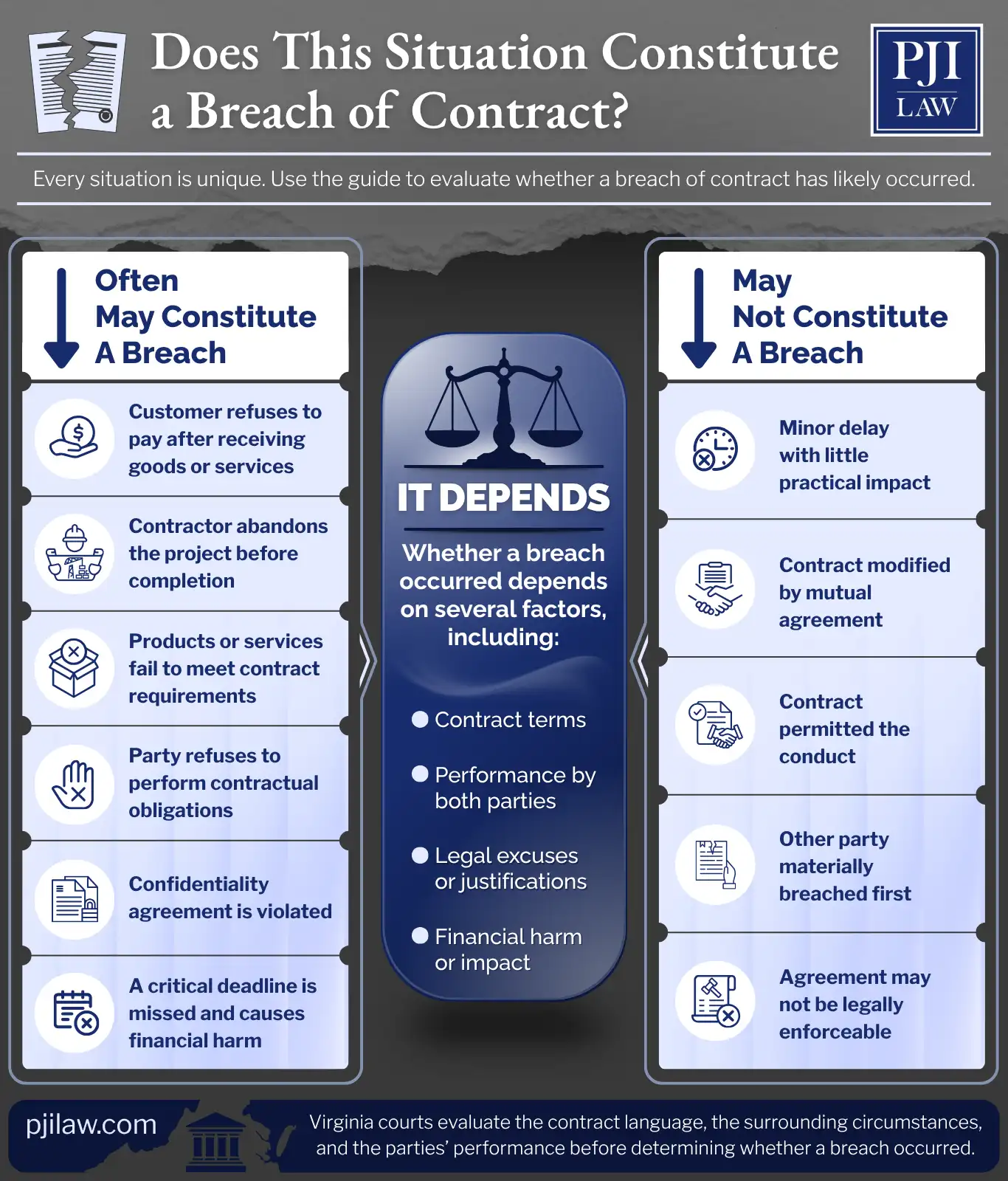
Situations That Often Count as a Breach of Contract
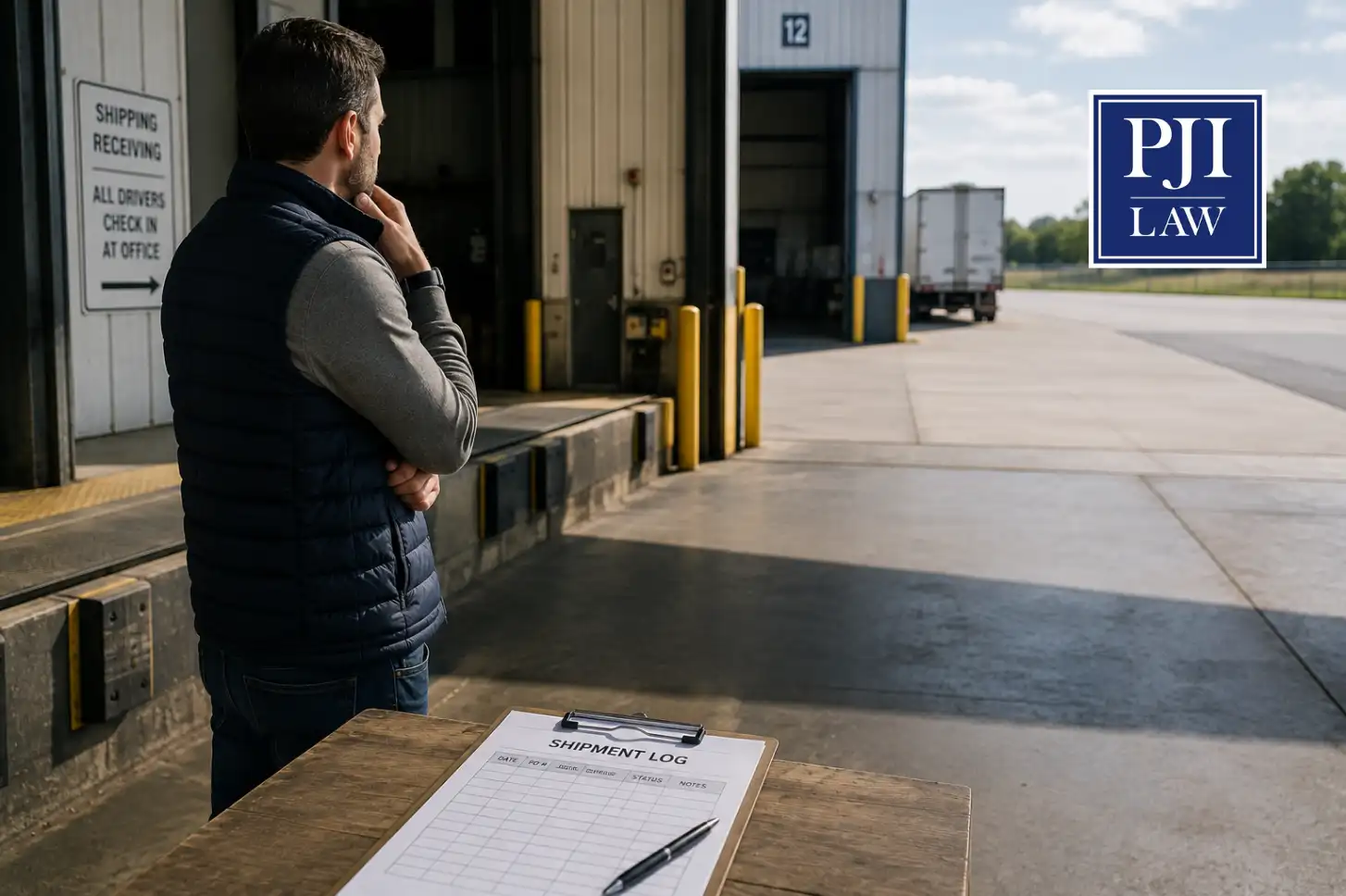
The following examples show how a failure to perform may appear in common business and service agreements. Whether any particular event constitutes a breach ultimately depends on the contract terms, the parties’ conduct, and whether a legal excuse applies.
A Customer or Client Refuses to Pay
One of the most common contract disputes arises when a customer or business fails to pay after receiving the agreed-upon goods or services. If payment was required under the agreement and no legal excuse applies, failing to pay may constitute a breach of contract.
A Contractor or Service Provider Walks Away from the Job
A contractor, consultant, or service provider who abandons a project before completing the required work may be in breach if the agreement required completion and no legal excuse exists. Whether the breach is material often depends on how much work remains and how the unfinished performance affects the other party.
Products or Services Do Not Meet the Contract Requirements
A breach may occur when delivered goods or completed work fail to comply with the quality standards, specifications, quantities, or other provisions outlined in the agreement. For example, a supplier who delivers substantially fewer products than required or a contractor who performs work that fails to satisfy the contract specifications may have breached the agreement.
A Party Refuses to Perform Its Contractual Duties
Sometimes a party simply refuses to fulfill its obligations despite being capable of doing so. A vendor may decline to deliver products after accepting payment, or a business may refuse to provide services it agreed to perform. Depending on the circumstances, this type of refusal may constitute a material breach.
A Confidentiality or Non-Disclosure Obligation Is Violated
Many business contracts include confidentiality or non-disclosure provisions designed to protect sensitive information. If one party improperly discloses confidential information in violation of the agreement, that conduct may support a breach of contract claim, particularly if it causes financial harm.
A Time-Sensitive Obligation Is Not Completed
A missed deadline may support a breach of contract claim when timely performance was a significant part of the agreement and the delay caused measurable losses. For example, failing to deliver materials needed for a scheduled construction project or business event may have more serious consequences than a short delay that causes no disruption.
Situations That May Not Count as a Breach of Contract
Even when another party fails to do what you expected, the law does not always treat that conduct as a breach of contract. The contract terms, the parties’ actions, and the surrounding circumstances may show that no actionable breach occurred.
A Minor Delay That Does Not Affect the Agreement’s Purpose
Missing a deadline does not automatically constitute a material breach. If a supplier delivers products one day late but the delay causes no meaningful disruption or financial loss, the court may determine that the agreement was substantially performed.
Whether a delay constitutes a breach often depends on the contract terms, the reason for the delay, and whether timely performance was an essential part of the agreement.
The Parties Agreed to Change the Contract
Business relationships often evolve after a contract is signed. The parties may agree to extend deadlines, modify pricing, change the scope of work, or revise other provisions.
If both parties agreed to those changes, conduct that would otherwise appear to violate the original agreement may no longer constitute a breach.
The Contract Allowed the Conduct
Some agreements provide flexibility by allowing delays, substitutions, extensions, or alternative methods of performance under certain circumstances.
Before concluding that a breach occurred, it’s important to review the entire agreement rather than relying on a single provision.
The Other Party Breached First
Virginia recognizes circumstances where one party’s prior material breach may affect the other party’s obligation to continue performing under the contract.
For example, if a customer refuses to make required payments, the contractor may argue that continuing performance was no longer required because the other party materially breached the agreement first.
The Agreement May Not Be Legally Enforceable
Not every agreement creates a legally enforceable contract. If the parties never reached a binding agreement or an essential contract requirement is missing, a breach of contract claim may not succeed.
Determining whether a valid contract exists often requires examining the specific facts, communications between the parties, and applicable Virginia law.

When Does a Breach Become Material?
Whether a breach is material can affect both parties’ remaining duties under the agreement. A material breach of contract is a substantial failure to perform that defeats the primary purpose of the agreement. Because the breach significantly affects what the other party expected to receive, Virginia courts may conclude that the non-breaching party is no longer required to continue performing its own contractual obligations.
By contrast, a minor breach involves a less significant failure that does not substantially undermine the overall agreement. While the injured party may still have a claim for damages, the contract itself often remains enforceable, and both parties may still have continuing duties.
Compare these examples:
- A contractor abandons a commercial construction project after completing only 25% of the work. This is more likely to constitute a material breach because the unfinished work defeats the primary purpose of the agreement.
- A software developer delivers a completed project one day late without causing any measurable business interruption. This is less likely to constitute a material breach because the delay did not substantially deprive the other party of the benefit of the bargain.
- A supplier refuses to deliver products after accepting payment. This often constitutes a material breach because the supplier failed to perform a fundamental contractual obligation.
- A consultant submits a required report one day after the agreed deadline without affecting the project. This is less likely to constitute a material breach because the agreement was still substantially performed.
Every situation depends on the specific facts, the contract terms, and the extent to which the breach deprived the non-breaching party of the benefit of the bargain.
Can Several Small Problems Become a Material Breach?
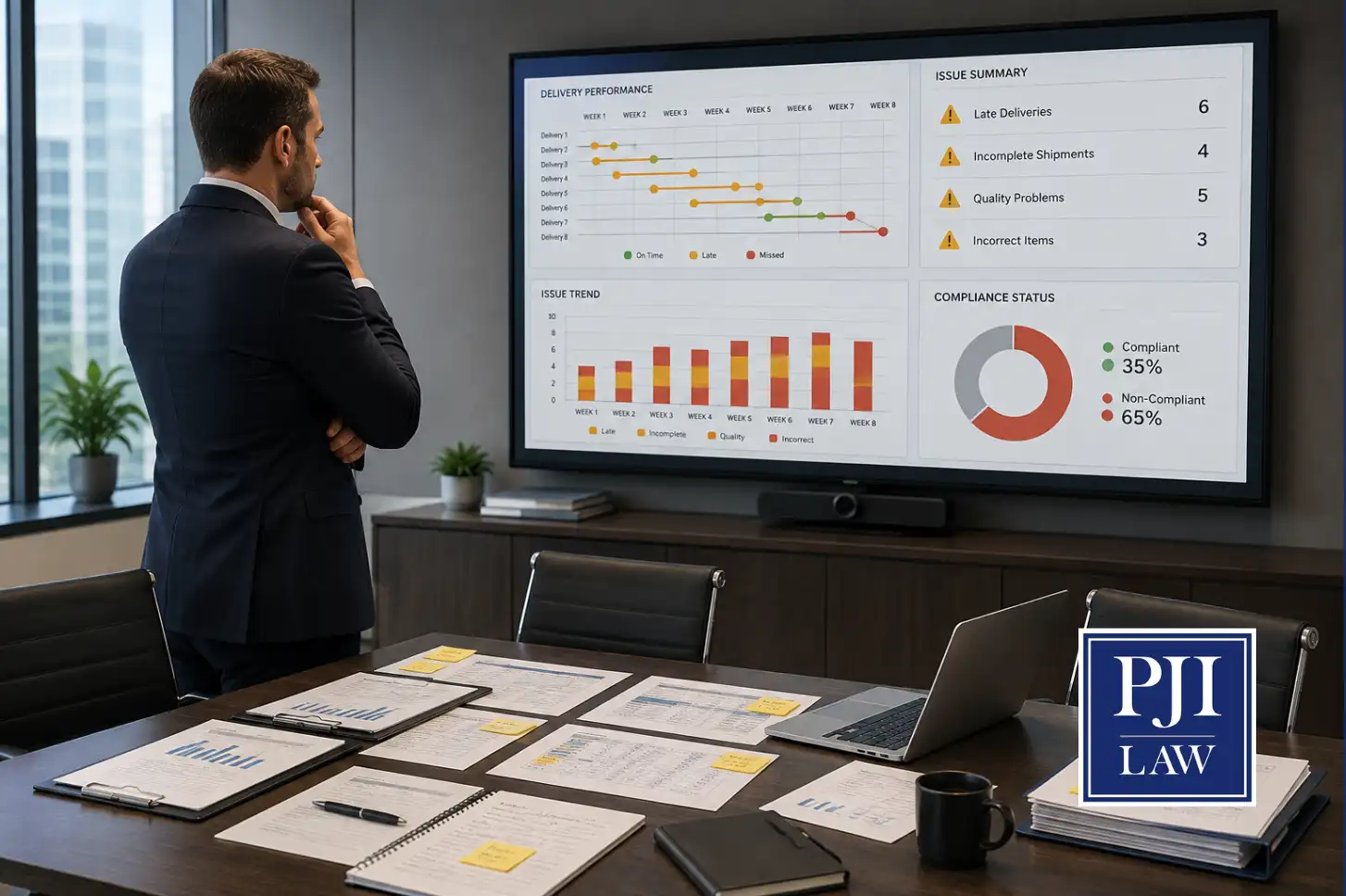
Sometimes no single issue appears serious enough to justify terminating the agreement. However, the cumulative effect of repeated failures may tell a different story.
For example, a vendor who repeatedly misses delivery deadlines, ships incomplete orders, ignores quality requirements, and fails to correct ongoing problems may create a pattern of noncompliance that substantially interferes with the agreement’s purpose.
Rather than viewing each incident in isolation, a court may evaluate whether the cumulative effect of multiple breaches demonstrates a substantial failure to perform contractual obligations.
This is one reason it’s important to document ongoing performance issues instead of focusing only on the most recent event.
What Remedies May Be Available for a Breach of Contract?
If a breach of contract claim is successful, Virginia law recognizes several remedies depending on the nature of the agreement and the harm suffered. The appropriate remedy depends on the contract, the circumstances of the breach, and the losses experienced by the injured party.
Compensatory Damages
Compensatory damages are the most common remedy in breach of contract actions. Their purpose is to place the non-breaching party as close as reasonably possible to the financial position they would have occupied had the contract been performed as agreed.
Examples may include unpaid contract amounts, additional completion costs, or other proven financial losses resulting from the breach.
Liquidated Damages
Some contracts contain liquidated damages provisions that establish in advance the amount one party must pay if certain types of breaches occur.
Virginia courts may enforce these provisions when they represent a reasonable estimate of anticipated damages rather than an unenforceable penalty. For contracts involving the sale of goods, liquidated damages provisions are specifically addressed under Virginia Code § 8.2-718.
Specific Performance
In some situations, monetary compensation alone may not adequately address the harm caused by a contract breach. A court may order specific performance, requiring the breaching party to fulfill contractual obligations.
This remedy is more commonly considered when the contract involves unique goods or real property that cannot easily be replaced. For contracts involving unique goods, Virginia Code § 8.2-716 expressly authorizes specific performance in appropriate circumstances.
Rescission
Rescission cancels the agreement and seeks to restore the parties to substantially the same position they occupied before entering into the contract.
This remedy may be appropriate in certain circumstances where continuing the contractual relationship is no longer practical.
Restitution and Unjust Enrichment
A court may also award restitution to prevent unjust enrichment when one party received a benefit under circumstances where retaining that benefit would be inequitable.
Nominal Damages
In limited situations, nominal damages may be awarded when a breach occurred but the plaintiff cannot demonstrate significant financial loss.
Are Punitive Damages Available?
Punitive damages are not typically available in ordinary breach of contract cases. However, they may become relevant when the dispute also involves an independent tort, such as fraud, and Virginia law otherwise permits their recovery.
What Should You Do if You Believe a Contract Was Breached?
If you believe another party violated a contract, the actions you take immediately afterward may affect your legal options.
Consider taking the following steps:
- Review the contract carefully before concluding that a breach occurred.
- Preserve the signed agreement, amendments, emails, text messages, invoices, payment records, and other relevant evidence.
- Document how the alleged breach affected your business or finances.
- Continue complying with your own contractual duties unless the agreement or applicable law allows otherwise.
- Avoid making assumptions about your legal rights without first evaluating the specific circumstances.
- Consult experienced Virginia contract attorneys if significant financial interests are involved or you’re uncertain how to respond.
Early legal guidance may help identify available remedies, preserve important evidence, and evaluate whether negotiation, mediation, or legal proceedings provide the most appropriate path toward resolving the dispute.
Frequently Asked Questions
What is considered a breach of contract in Virginia?
A breach of contract occurs when one party fails to fulfill contractual obligations required by a valid agreement without a legal excuse, and the breach leads to legally recognized harm.
Does every broken promise qualify as a breach of contract?
Not every disagreement, missed deadline, or disappointing outcome constitutes a breach of contract. The answer depends on the agreement’s language, the surrounding circumstances, and whether the failure materially affected the contract.
What is a material breach?
A material breach is a substantial failure to perform that defeats the primary purpose of the agreement. A material breach may excuse the non-breaching party from continuing to perform under the contract.
Can several minor breaches become a material breach?
In some situations, Virginia courts may consider the cumulative effect of repeated failures when determining whether the overall performance amounts to a material breach.
How long do I have to file a breach of contract lawsuit in Virginia?
The statute of limitations is generally five years for written contracts and three years for oral contracts under Virginia Code § 8.01-246. The applicable deadline depends on the type of agreement and the specific facts of your case.
What damages are available in a breach of contract case?
Depending on the circumstances, breach of contract damages may include compensatory damages, liquidated damages, specific performance, rescission, restitution, or nominal damages. The appropriate remedy depends on the contract, the nature of the breach, and the losses suffered by the non-breaching party.
Can I recover attorney’s fees?
Attorney’s fees are not automatically awarded in Virginia breach of contract cases. Whether they are recoverable often depends on the language of the contract or another applicable legal basis.
Can a verbal agreement be enforced?
In some situations, yes. Virginia recognizes certain oral agreements, although proving their terms may present additional challenges. The specific facts determine whether an oral agreement is legally enforceable.
Do I have to file a lawsuit immediately?
Depending on the circumstances, negotiation, mediation, or other dispute resolution methods may resolve contract disputes without litigation.
When should I contact a Virginia contract attorney?
You should consider speaking with a contract attorney if the dispute involves significant financial losses, complex contract terms, uncertainty about your legal rights, or questions about the remedies that may be available.

Find Out Where You Stand Before a Contract Dispute Escalates
A contract dispute can interrupt your business, affect important relationships, and create uncertainty about your next steps. Whether you’re evaluating a potential breach, responding to allegations that you’ve violated an agreement, or trying to resolve a dispute before litigation becomes necessary, evaluating your legal options early can help you avoid decisions that may affect your claim or your ability to enforce the agreement.
At PJI Law, PLC, our Virginia contract dispute lawyers represent businesses and individuals throughout Northern Virginia in a wide range of contract matters, including drafting agreements, resolving contract disputes, and pursuing or defending breach of contract claims. We provide white-glove service and personal attention while developing legal strategies tailored to your specific circumstances.
If you have questions about a potential breach of contract in Virginia, call (703) 865-6100 or contact us online to schedule your complimentary consultation.
At PJI Law, you’ll receive white-glove service and personal attention from a team that treats you like family.
Copyright © 2026. PJI Law, PLC. All rights reserved.
The information in this blog post (“post”) is provided for general informational purposes only and may not reflect the current law in your jurisdiction. No information in this post should be construed as legal advice from the individual author or the law firm, nor is it intended to be a substitute for legal counsel on any subject matter. No reader of this post should act or refrain from acting based on any information included in or accessible through this post without seeking the appropriate legal or other professional advice on the particular facts and circumstances at issue from a lawyer licensed in the recipient’s state, country, or other appropriate licensing jurisdiction.
PJI Law, PLC
3900 Jermantown Road, 2nd Floor
Fairfax, VA 22030
(703) 865-6100
https://www.pjilaw.com
