

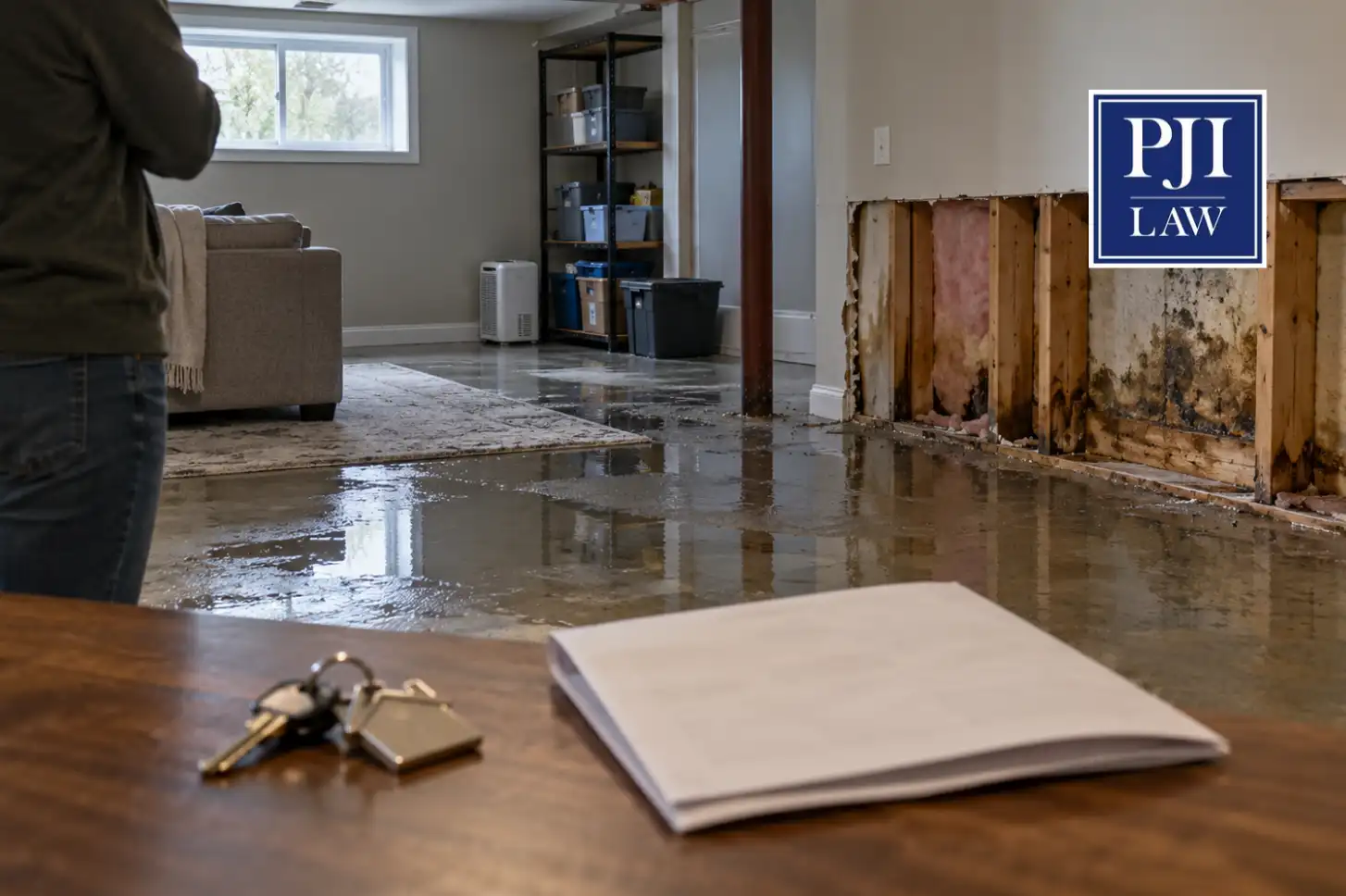
The first heavy rain after closing sends water across your new basement floor. A contractor pulls back the finished wall and finds staining, damaged framing, and signs of earlier repairs. Now you’re facing a repair estimate while trying to work out whether the seller knew and whether you have any way to recover your costs.
A claim for failure to disclose property defects in Virginia depends on more than finding serious damage after closing. Under Virginia’s buyer-beware doctrine, buyers are expected to investigate a property’s condition before closing, including arranging inspections when appropriate. Whether you can seek compensation, pursue another legal remedy, or must bear the repair costs depends on what the seller was required to disclose, what the seller said or did, the terms of your contract, and the evidence you can gather.
The rules also differ between a residential home purchase and a commercial real estate transaction. This blog explains both, so you can identify the questions that matter before the evidence disappears or a deadline passes.
At a Glance
- Virginia follows a buyer-beware doctrine. A home seller does not have to provide a general list of every defect, and buyers are expected to conduct their own due diligence.
- For a residential transaction covered by the Virginia Residential Property Disclosure Act (Act), the seller must provide the residential property disclosure statement and any other disclosures the Act requires. Some transfers are exempt, and a newly built home’s first sale has separate rules.
- A buyer may have a claim if the seller failed to provide a required disclosure, made an actionable false statement, actively concealed a defect, or broke a promise in the purchase contract.
- The evidence must do more than show that a defect exists. It should help establish what the seller knew, said, concealed, or agreed to do before the sale.
- The residential disclosure law has its own remedies and deadlines. A fraud or contract claim requires a separate analysis.
- Commercial buyers should have their purchase agreement, due diligence materials, and the seller’s written representations reviewed. The Act applies to specified residential transactions, not commercial-property sales.

Can You Sue a Seller for an Undisclosed Property Defect in Virginia?
You may be able to sue, but the reason matters. A roof leak discovered after closing raises a different legal question from evidence that the seller covered water damage with new drywall or gave you a false answer about prior leaks.
A useful first step is to identify which of these situations fits your transaction:
| What happened? | What you need to investigate |
| You found a defect the seller never mentioned. | Did the seller have a specific duty to disclose it? Could an inspection have revealed it? |
| You did not receive a disclosure required for a residential sale. | Which disclosure was required, when should it have been delivered, and what loss did the omission cause? |
| The seller made a statement that appears false. | What exactly was said, when was it said, and what evidence shows it was false? |
| The seller may have covered up the problem. | Is there evidence of prior repairs, concealment, or efforts to prevent you from finding it? |
| The contract promised a repair or made a statement about the property’s condition. | What did the signed contract require, and was that obligation met? |
These possibilities can overlap. For example, a seller might fail to provide a required disclosure and separately make a false statement about the same property. An attorney can evaluate each possible claim against the transaction documents and available evidence.
What Does Virginia’s Buyer-Beware Doctrine Mean?
Virginia’s doctrine of caveat emptor, or “buyer beware,” places substantial responsibility on the buyer to investigate real property before settlement. The Virginia Residential Property Disclosure Act requires an owner in a covered residential transaction to furnish a residential property disclosure statement.
Under Va. Code § 55.1-703, that statement tells the purchaser that the owner makes no general representations or warranties about the condition of the property or its improvements. It is not a seller-completed list of known defects. It advises the purchaser to exercise due diligence, including obtaining a home inspection under the terms of the purchase contract.
This does not mean Virginia law requires every buyer to order a home inspection. It means an inspection is an important way to investigate before closing, subject to the rights and deadlines in the purchase agreement. Nor does buyer beware give a seller permission to make a false statement or intentionally misrepresent the property’s condition. The disclosure statute expressly preserves otherwise available remedies for an owner’s intentional or willful misrepresentation.
What can a home inspection tell you?
An inspection may identify visible signs of water intrusion, foundation movement, roof damage, electrical problems, or concerns with a plumbing system. Its scope depends on the inspection agreement and what the inspector could access. A finished wall, stored belongings, or a recently covered surface may keep a problem out of view.
Review the inspection report carefully rather than assuming it either proves or defeats a claim. Did the inspector flag a stain and recommend further evaluation? Was the affected area inaccessible? Did the report identify signs that called for a structural engineer, roofer, or other contractor before settlement? Those details help show what the buyer could have discovered before closing.
Different issues may call for different work. A standard home inspection is not a substitute for every specialized assessment, such as an evaluation of septic tanks, a mold assessment, a survey, or a structural inspection. The purchase contract determines whether the buyer had time and a contractual right to obtain those assessments before closing.
What Must a Residential Property Seller Disclose in Virginia?
The requirements depend on the type of sale. For a covered resale, Virginia does not impose a blanket requirement that sellers volunteer every known material defect. Instead, Virginia seller disclosure requirements combine a buyer-beware statement with specific disclosures that apply when the statutory conditions are met.
The first sale of a newly built home follows different rules: A builder must disclose known material defects that violate an applicable building code.
Examples include:
- Certain pending building or zoning violations. A residential owner with the actual knowledge described in Va. Code § 55.1-706 must provide the required written disclosure. The statute is specific about the type of enforcement action or violation; an old permit question is not automatically the same thing.
- Certain repetitive flood losses. An owner who actually knows that the dwelling is a “repetitive risk loss structure,” as defined in Va. Code § 55.1-708.2, must disclose that fact on the Real Estate Board’s form. This is a defined National Flood Insurance Program claims category, not a general requirement to recount every instance of water entering the property.
- Location in a designated military air installation zone. When the conditions in Va. Code § 55.1-704 apply, the seller must identify the designated noise or accident potential zone on the required form.
- Prior methamphetamine manufacturing without the required cleanup. Under Va. Code § 55.1-708, an owner who actually knows the dwelling was previously used to manufacture methamphetamine must provide written disclosure if it has not been cleaned up in accordance with the applicable requirements.
A separate federal rule also requires disclosures about known lead-based paint and lead-based paint hazards in most housing built before 1978, along with available records and other required information. This is not a general promise that the home is free of lead-based paint.
Other provisions may apply depending on the property. The point for a buyer is to compare the exact condition and facts discovered with the statute and the disclosures delivered in that transaction. A seller’s duty concerning a defined flood-loss designation, for example, is different from the buyer’s responsibility to investigate broader flood risk before settlement.
When should the disclosure statement be delivered?
Under Va. Code § 55.1-709, an owner subject to the Act is to provide notice of the required disclosures before ratification of the real estate purchase contract. If the disclosures arrive after ratification, the statute sets a limited right to terminate.
That right can expire three days after delivery in person or electronically, or five days after the postmark if the disclosures are mailed. It may end sooner upon settlement, occupancy, a separate written waiver, or a mortgage loan application that contains the notice specified in the statute. The buyer must give the seller written notice of termination within the applicable period using a method permitted by the statute.
If you are still under contract, do not assume that a late statement gives you an open-ended chance to cancel. Check when and how it was delivered, your contract terms, and the statutory deadline promptly.
When Can a Seller’s Conduct Support a Fraud Claim?

A claim involving real estate fraud in Virginia requires more than proof that the property has a defect. To prove intentional fraud, a buyer must establish a false representation of material fact, which may include deliberate concealment, made knowingly with intent to mislead; the buyer’s reliance on it; and damage caused by that reliance.
A broad opinion such as “this is a great building” is different from a specific statement about a past foundation repair, recurring leak, or completed remediation. PJI Law discusses these requirements further in its article on fraudulent misrepresentation in Virginia.
False statements about past problems or completed repairs
A seller might tell a buyer that a roof has never leaked, that a drainage problem was repaired, or that construction was completed with the required approvals. If evidence later contradicts a material factual statement, the buyer can ask whether it supports a fraud or contract claim.
Keep the original wording whenever possible. A listing description, email, text message, signed addendum, or contractor receipt is more useful than a later recollection that “the seller said everything was fine.” The date matters, too. A statement made before the buyer removed an inspection contingency or agreed to close may have a different effect from one made after the transaction was completed.
Active concealment of a defect
The buyer-beware doctrine does not give an owner a license to hide a problem or intentionally misrepresent the property’s condition. Evidence that a seller placed a temporary covering over damaged material, concealed recurring water intrusion, or interfered with an inspection deserves careful review.
Still, a recently painted wall does not prove concealment by itself. There may be an innocent explanation, and the buyer must connect the seller’s conduct to the defect and the purchase. Virginia’s disclosure statute preserves remedies otherwise available for intentional or willful misrepresentation.
Can a Broken Promise in the Purchase Agreement Support a Claim?
Some disputes turn on the contract rather than a general duty to disclose. The seller may have agreed in writing to repair a drainage issue, provide documentation, or deliver the property in a stated condition. Compare the signed purchase agreement and all addenda with the work actually completed. A seller can break a contractual promise without having committed fraud; the available claim depends on the agreement and what happened.
PJI Law’s blog about Virginia purchase agreements explains how contingencies and written terms shape a transaction. For a post-closing defect claim, the questions are narrower: What did this seller promise, what was completed, and what does the contract say about inspection, repairs, and remedies?
Does Buying a Property “As Is” End Your Options?
An “as is” clause is important, but it is not a complete answer without the rest of the contract and facts. It may show that the buyer accepted responsibility for investigating the property’s condition and that the seller did not agree to make repairs. It does not make a false factual statement true or erase every separately supported claim involving intentional misrepresentation.
The details matter. Did the buyer have an inspection contingency and use it? Did the seller make a specific statement outside the general buyer-beware form? Was a defect visible or hidden? Did the contract contain representations, waivers, or limits on remedies? A lawyer needs the entire signed agreement and its addenda, not merely the page bearing the words “as is.”

What Changes When the Defective Property Is Commercial?
PJI Law also handles business and real estate disputes, so a buyer of a commercial building may face a similar financial crisis: a damaged roof interrupts operations, an undisclosed condition delays planned construction, or a structural defect changes the economics of the investment. The Virginia Residential Property Disclosure Act is directed at covered residential real estate transactions. Its residential property disclosure statement and chapter-specific termination rules should not simply be applied to a commercial purchase.
For commercial buyers, start with the negotiated documents and the due diligence record:
- What did the purchase agreement say about the building, improvements, environmental conditions, permits, or compliance?
- Did the seller make written representations or warranties, and did any survive closing?
- What reports and records did the buyer request or receive?
- Was there an inspection period, an opportunity to obtain specialized assessments, or a procedure for notifying the seller of a problem?
- Did the agreement limit available remedies, set notice requirements, or require a particular dispute resolution process?
Commercial buyers should also examine whether the defect affects a tenant’s use, planned construction, financing, or the property’s value. Those consequences can affect the practical stakes and the documentation needed to evaluate damages. They do not, on their own, establish seller liability.
How Can You Prove the Seller Knew About a Defect?
A current contractor’s report may establish that the foundation has moved or that water has entered a wall for some time. It may not establish who knew about the condition before the sale. To bridge that gap, gather records that show the property’s history and what the seller communicated.
Useful evidence may include:
- Transaction documents: The signed purchase contract, addenda, disclosure forms, inspection contingency, repair agreement, listing, and closing documents.
- Communications: Emails, texts, messages through a real estate agent, and written answers to the buyer’s questions.
- Earlier work: Invoices, warranties, estimates, insurance correspondence, or contractor records showing prior attempts to address the same condition.
- Official records: Permit and inspection records, notices of building or zoning violations, and other records tied to the defect. In Northern Virginia, you can start with Fairfax County’s PLUS portal, Loudoun County’s LandMARC system, or Prince William County’s ePortal, depending on where the property is located. However, an online search may not show every relevant record.
- Condition evidence: Dated photos and videos, inspection reports, expert assessments, and photographs taken while damaged material is exposed.
- Witness information: People with firsthand knowledge of prior leaks, repairs, or statements about the property.
You may have some of these records already, while others may require an attorney’s investigation or formal discovery if a lawsuit is filed. Look for a timeline, not just a stack of documents. When did signs of the defect first appear? When was repair work performed? What did the seller learn? What was said to the buyer? What could the buyer’s inspector see? When was the problem discovered after closing?
What should you do while preserving evidence?
If the defect creates an immediate safety risk or ongoing damage, keep people away from the affected area and contact an appropriately qualified professional. Photograph the condition before emergency work when it is safe to do so, and ask what removed materials can reasonably be preserved. Do not delay necessary repairs solely to collect evidence. Keep the repair reports and invoices, and speak with a real estate dispute attorney promptly about potential claims and deadlines.
Review any applicable homeowners or commercial property insurance policy and its notice requirements, too. Insurance coverage for the damage is a separate question from whether the seller is legally responsible.
What Can a Buyer Recover?
The available relief depends on the claim proved and the loss it caused. Under Va. Code § 55.1-713, a purchaser may seek actual damages when the owner fails to provide an applicable disclosure required by the residential chapter or misrepresents information required in that disclosure, and the violation causes a loss.
Whether the buyer can recover depends on the statute’s specific requirements and exceptions; a disclosure delivered late does not automatically establish a damages claim. The chapter also preserves other remedies that may be available for intentional or willful misrepresentation.
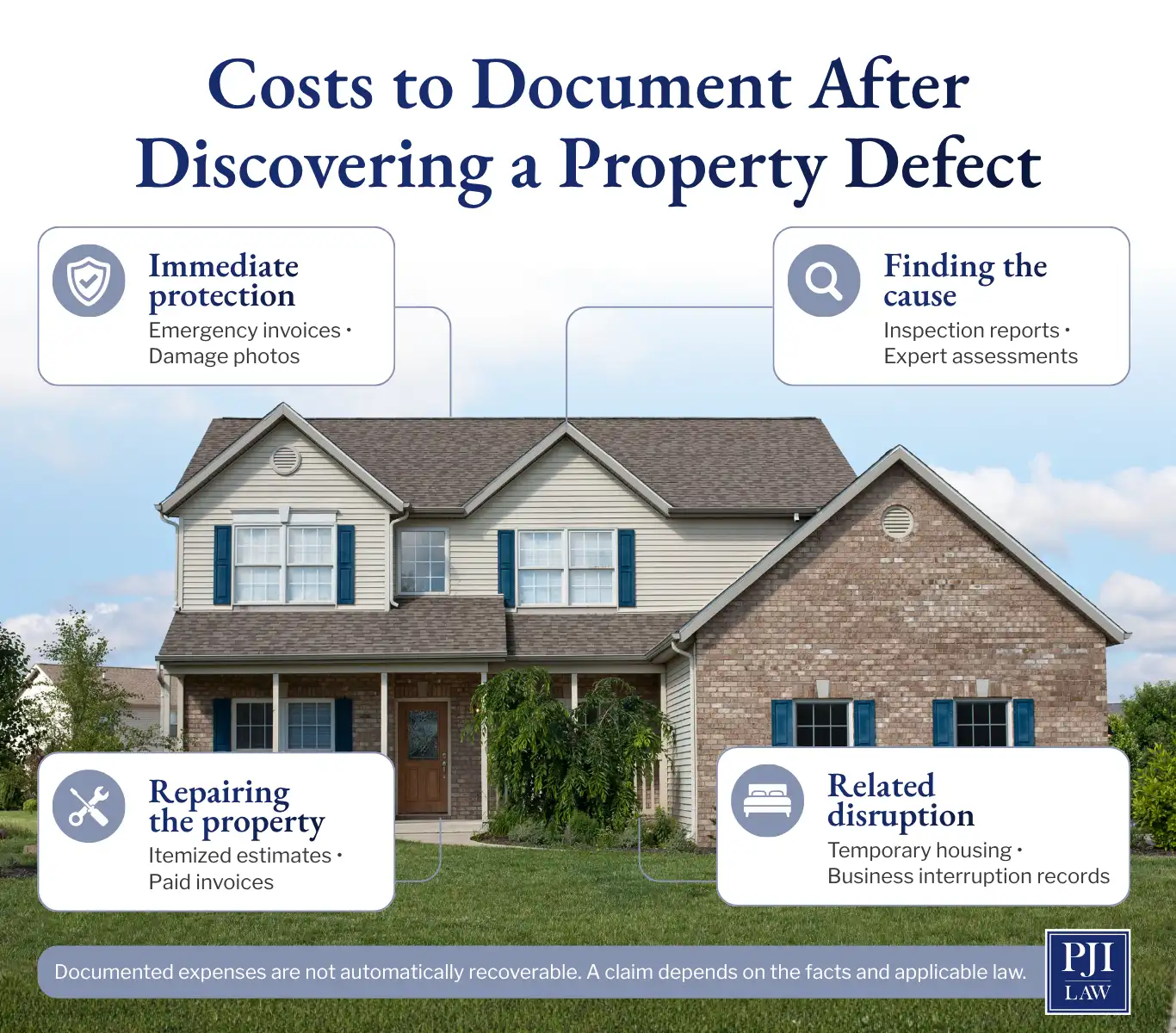
In a supported fraud or contract dispute, an attorney may evaluate repair costs, a difference in property value, or other documented losses under the rules applicable to that claim. The amount spent fixing a problem is not automatically the amount a court will award. You must connect the claimed loss to actionable conduct and the proper measure of damages.
A buyer may also ask whether the completed sale can be canceled and the property returned to the seller. That requires a separate legal analysis. Discovering a major defect does not, by itself, give the buyer the right to return the property and recover the purchase price.
How Long Do You Have to Sue?
The deadline depends on the claim. Do not assume you have one year from closing, or that discovering a hidden defect starts every deadline.
- Claim under the Virginia Residential Property Disclosure Act: You generally must file within one year after receiving the required disclosure. If the required disclosure was never delivered, the one-year period runs from settlement in a sale. (Va. Code § 55.1-713)
- Fraud claim: Virginia generally allows two years from when you discovered the fraud or reasonably should have discovered it through due diligence. (Va. Code §§ 8.01-243 and 8.01-249.)
- Certain written-contract claims: Virginia provides five years from the breach for an action on a contract signed by the party being sued. Discovering the defect later does not, by itself, restart that period. (Va. Code § 8.01-246.)
More than one claim may be possible, and each can have a different deadline. Have an attorney review your contract, disclosures, and the dates you learned about the problem before relying on any of these periods.
Frequently Asked Questions
Does a Virginia seller have to disclose every known problem with a house?
No. Virginia’s residential disclosure statement follows the buyer-beware doctrine rather than requiring a complete inventory of property defects. Specific statutory disclosures may still be required, and a seller’s false statements or intentional misrepresentation can support a separate claim. What the seller said or did, and what the buyer can prove, are key.
Can I sue if the home inspector missed the defect?
Possibly, but an inspector missing a defect does not establish that the seller committed fraud. Review the inspection agreement and report, what was visible at the time, and any evidence that the seller knew about or hid the condition. Whether the inspector has a separate responsibility depends on the scope of the inspection and the inspector’s work.
What if the seller told me a past leak had been fixed?
Keep the seller’s exact statement and gather records of the earlier leak and repair. A new leak does not necessarily mean the seller’s statement was false when made. Evidence of recurring problems after the purported repair, prior contractor warnings, or repairs that failed before the sale may change the analysis.
Can I sue after buying the property “as is”?
An “as is” term can affect what condition the buyer agreed to accept and what inspections the buyer should have performed. It does not, by itself, resolve a claim based on an actionable false statement or intentional misrepresentation. The complete contract, the seller’s conduct, and the buyer’s due diligence need to be reviewed together.
Does the one-year deadline apply to a commercial property purchase?
The one-year action deadline discussed above comes from the Virginia Residential Property Disclosure Act. It should not be applied automatically to a commercial purchase. A commercial buyer’s potential fraud or contract claim has to be evaluated under the applicable agreement and law.
What if the seller says they did not know about the defect?
A defect’s existence does not prove the seller knew about it. Earlier repair invoices, contractor messages, insurance correspondence, or other records may help establish what the seller learned before the sale. A buyer should also examine any specific disclosure duty or contract promise, because the requirements depend on the claim.
Can I cancel a purchase contract if the seller provides disclosures late?
You may have a limited right to terminate a covered residential purchase under Va. Code § 55.1-709. The deadline can be only days after delivery and can end sooner upon certain events, including settlement. The statute requires timely written notice using a permitted delivery method, so review a late disclosure immediately.
Can the seller’s real estate agent be responsible for an undisclosed defect?
Possibly. A Virginia real estate agent working for the seller must not knowingly give prospective buyers false information and must disclose in writing material adverse facts about the property’s physical condition that the agent actually knows. The agent is not automatically responsible for every hidden defect. If you had your own agent, that agent’s duties to you may also need review. Keep the listing and your communications with both agents.
What should a commercial buyer look for in the purchase agreement?
Review the seller’s written representations and warranties, inspection and due diligence provisions, notice requirements, limits on remedies, and any terms that remain enforceable after closing. The agreement and the evidence of what the seller communicated will shape a potential claim.
Can I recover everything I spend on repairs?
Not automatically. Repair invoices help document your loss, but the recoverable amount depends on the claim, the proper measure of damages, and whether you can connect those costs to the seller’s actionable conduct or broken contract promise. Keep estimates, invoices, payment records, and photographs showing the work performed.

When Should You Contact PJI Law About an Undisclosed Property Defect?
Contact a real estate dispute attorney if a serious defect has left you with a substantial repair estimate, you found evidence of earlier problems or repairs, or the seller’s statements conflict with what an inspector or contractor has uncovered. An attorney can also help if the seller denies knowing about the condition, points to an “as is” clause, or you are concerned that a filing deadline is approaching. You don’t need to obtain every record yourself before asking for a review.
At PJI Law, PLC, our Virginia real estate dispute attorneys represent individuals and businesses. We can examine your purchase agreement, disclosures, inspection reports, communications, and repair history to identify the questions your claim turns on. When a defect requires technical evaluation, our attorneys can work with contractors, engineers, land surveyors, and other real estate professionals. We can pursue a resolution through negotiation or, when necessary, prepare the dispute for court.
If you discovered serious defects after buying a home or commercial property in Virginia, call (703) 865-6100 or contact us online to schedule your complimentary consultation.
At PJI Law, you’ll receive white-glove service and personal attention from a team that treats you like family.
Copyright © 2026. PJI Law, PLC. All rights reserved.
The information in this blog post (“post”) is provided for general informational purposes only and may not reflect the current law in your jurisdiction. No information in this post should be construed as legal advice from the individual author or the law firm, nor is it intended to be a substitute for legal counsel on any subject matter. No reader of this post should act or refrain from acting based on any information included in or accessible through this post without seeking the appropriate legal or other professional advice on the particular facts and circumstances at issue from a lawyer licensed in the recipient’s state, country, or other appropriate licensing jurisdiction.
PJI Law, PLC
3900 Jermantown Road, 2nd Floor
Fairfax, VA 22030
(703) 865-6100
https://www.pjilaw.com
