

That text message sitting in your phone from three months ago might end up read aloud in a courtroom. So might the email you sent during a contract dispute, or a photo posted the same week something happened between you and a business partner. Maybe you’re on one side of a deal that fell apart and you’re wondering if your texts back it up. Maybe you’re on the other side, and you just realized a message you sent could get used against you instead.
Once a disagreement turns into a real dispute, you want a straight answer: are text messages admissible in civil court in Virginia? What about the email chain, or a photo you posted?
Often, yes, on all three. But existing on your phone and getting admitted in front of a judge are two different things. Text messages, emails, and social media posts all have to clear the same hurdles as any other evidence before a court takes them seriously.
Knowing what those hurdles are and acting on them now can determine whether a message strengthens your case or never reaches the courtroom.
At a Glance
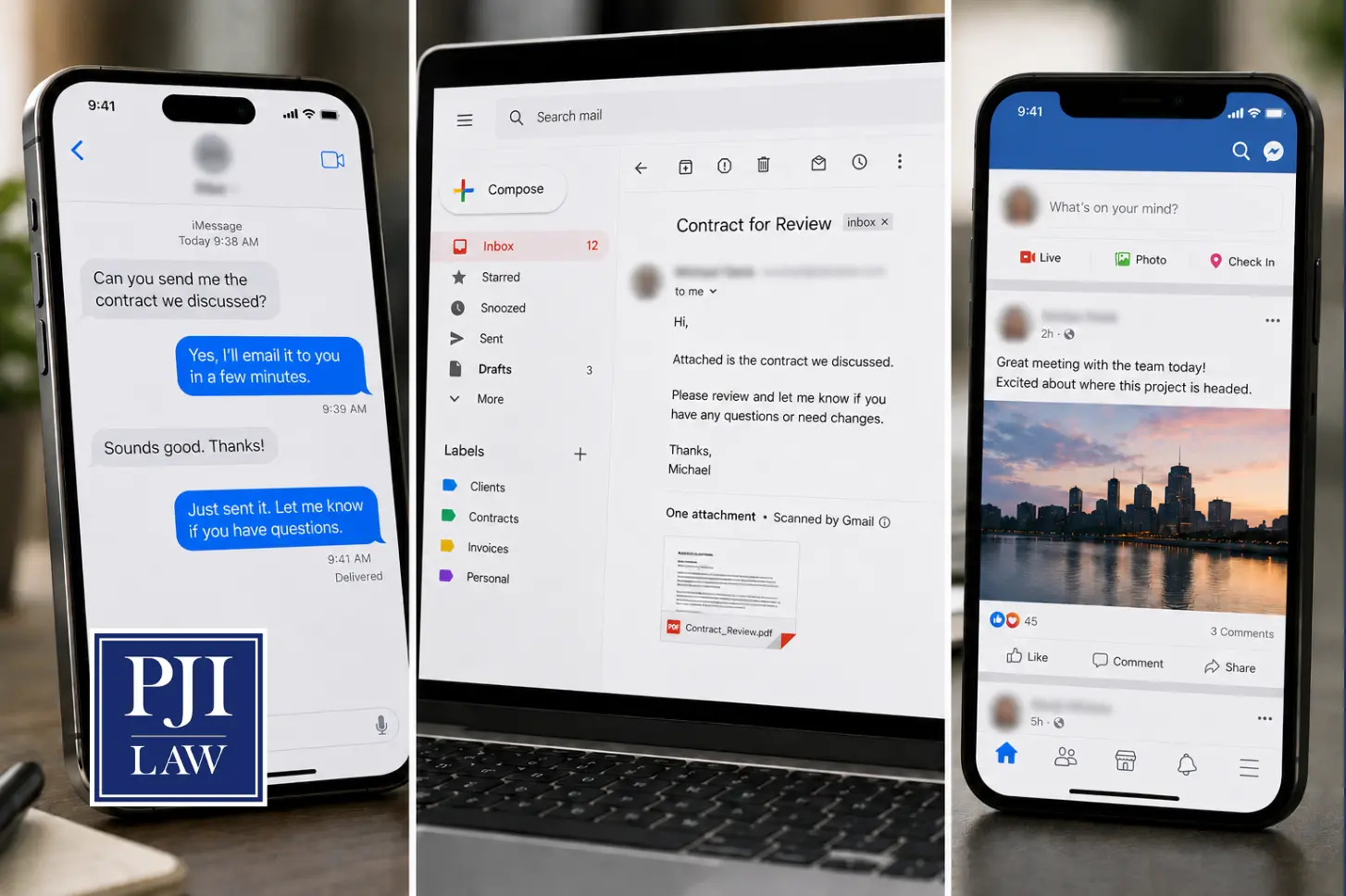
- Text messages, emails, and social media posts can be admitted in Virginia civil court if they satisfy the Virginia Rules of Evidence.
- Courts look at whether the evidence is relevant, authentic, and free of other evidentiary problems.
- Text messages often need extra proof showing who actually sent them and whether they’ve been altered.
- Deleting a message doesn’t always mean it’s gone. Recovery is sometimes possible through lawful means.
- Preserving digital communication early cuts down on authenticity disputes later.
Are Text Messages Admissible in Civil Court in Virginia?
In many cases, text messages are admissible in Virginia civil court if they satisfy the applicable Virginia Rules of Evidence. A text message isn’t automatically accepted the moment someone offers it during litigation, any more than a photograph or a document would be.
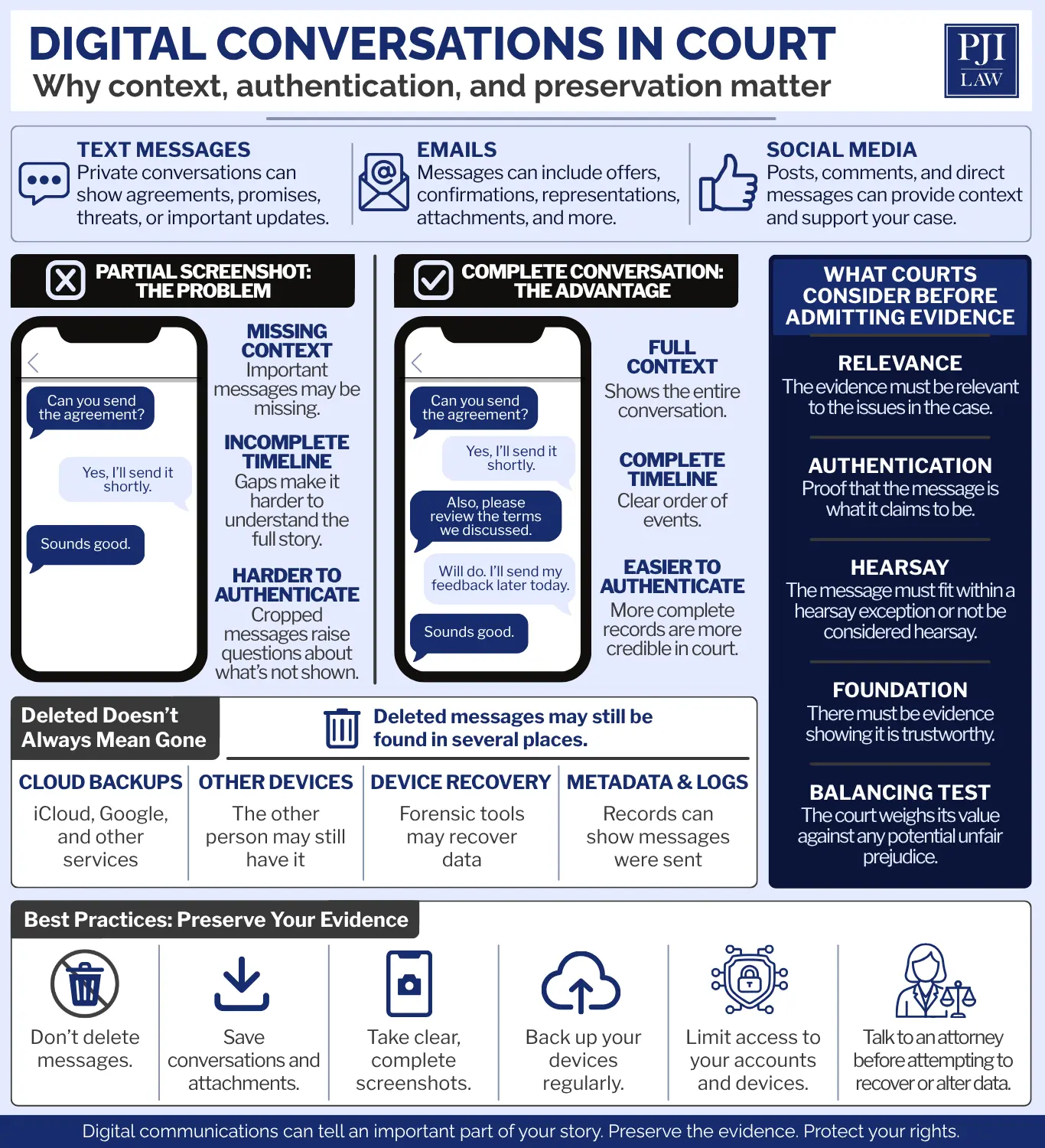
Before a judge allows a text message to be admitted as evidence, the court considers whether it’s relevant to the issues in dispute, properly authenticated, admissible under the Virginia Rules of Evidence, and presented in full rather than cherry-picked out of context.
That last point trips people up more than they expect. A single text can prove an agreement existed, pin down a timeline, or reveal what someone knew and when. It can also mean almost nothing on its own until it’s placed next to other evidence in the case. Courts increasingly treat text messages as evidence alongside emails and social media, part of one connected web of digital communication rather than isolated pieces.

Sending a Message Doesn’t Keep It Private
A lot of people assume a private message stays private unless somebody breaks the law to get it. Once you send a text, email, or direct message to another person, you’ve given up control over what they do with it. If they take a screenshot, forward it, or show it to their attorney, that’s not a privacy violation on their part.
The message is theirs to keep and share once it lands in their inbox or on their phone. That’s part of why so many people find themselves surprised at what turns up in a lawsuit. The conversation felt private in the moment, but legally, it only takes one participant deciding to save it.
What Actually Makes a Text Message Admissible
Courts weigh a text message against several distinct requirements before it becomes evidence. Miss one, and it doesn’t come in, however damaging or convincing the content might be.
It Has to Be Relevant
If a message doesn’t connect to a fact actually in dispute in the lawsuit, it doesn’t get in, no matter how interesting it is. Relevant messages tend to show up in contract negotiations, real estate transactions, fraud claims, mechanic’s lien disputes, property disagreements, conversations tied to an incident, or outright admissions. The tighter the connection to what’s being disputed, the more weight the message can carry.
Take a mechanic’s lien dispute as an example. If a contractor texted you photos of completed work and a promise to finish the punch list by a certain date, that exchange speaks directly to what was promised and when. A separate text from the same week about weekend plans, unrelated to the job, wouldn’t clear the relevance bar even though it came from the same conversation.
It Has to Be Authenticated
This is where challenges happen more often than anywhere else. A screenshot alone doesn’t prove anything. Before a text message counts as evidence, the person offering it typically has to show it’s genuine, meaning it’s what they claim it to be. Virginia’s authentication requirements are set out in the Code of Virginia, Chapter 14 on Evidence, which several of the Rules of Evidence on authentication and business records are drawn from directly.
That proof can come from:
- Testimony from someone who participated in the conversation
- Testimony from a witness familiar with the messages
- Information connecting the phone, device, or account to a particular person
- Metadata showing when the communication occurred
- Other identifying details that support authenticity
Say a business partner disputes ever sending an email agreeing to a payment split. Metadata showing the email originated from their account, combined with testimony from someone who saw them draft it, can be enough to establish it’s genuine even without their cooperation.
Authentication doesn’t require eliminating every possible doubt. It requires enough for the court to reasonably conclude the message is real before deciding how much it’s worth to the case.
It Has to Be Complete
A single screenshot rarely tells the whole story. Pull one line out of a longer conversation and it can look damning. Read the full exchange and that same line might read as a joke, a misunderstanding, or something walked back two texts later. Judges tend to favor full conversations over curated excerpts, and original messages over edited screenshots, for exactly this reason.
Other Rules Can Still Block It
Even a relevant, authenticated, complete message can run into hearsay objections, privilege issues, unfair prejudice arguments, or other procedural roadblocks. Hearsay and its exceptions, including the exception for business records, are addressed directly in Rule 2:803 of the Virginia Rules of Evidence. One exception worth knowing: Your own texts or emails are generally treated as an admission by a party-opponent, meaning your own words can be used against you without running into a hearsay problem at all.
A message you send to someone else typically doesn’t get the same hearsay protection a statement made in court would. Judges evaluate these objections based on Virginia law and the specific circumstances surrounding the communication. For that reason, whether a particular text message is admissible often depends on more than simply whether the text message exists.

What About Emails?
Emails carry a lot of the same weight as text messages, and in business disputes, contract disagreements, and real estate transactions, they’re often the core of the paper trail. They tend to preserve exactly what courts want to see: timestamps, sender and recipient information, and attachments that document decisions, approvals, financial terms, or changes to an agreement.
Courts still expect emails to be authenticated the same way texts are. Shared inboxes, forwarded chains, edited content, and missing attachments all raise questions that need answers before an email gets treated as reliable. Save the original whenever you can. A printed copy or a partial excerpt gives the other side more room to argue it’s incomplete or altered.
What About Social Media?
Public posts, photos, videos, comments, marketplace messages, location check-ins, and even private direct messages can all become relevant depending on what’s being disputed. Courts don’t treat something differently just because it lives on Instagram instead of in a text thread. The same authentication questions apply: who controlled the account, has anything been deleted or edited, and does other evidence back up what’s being shown.
Ever posted something you didn’t think twice about, only to realize later it lined up with the exact week your dispute started? That’s where people get caught off guard. A photo posted the same week a property dispute began, or an offhand comment about a business disagreement, can end up carrying more weight than it seemed to at the time.
What Happens if the Messages Are Already Deleted?
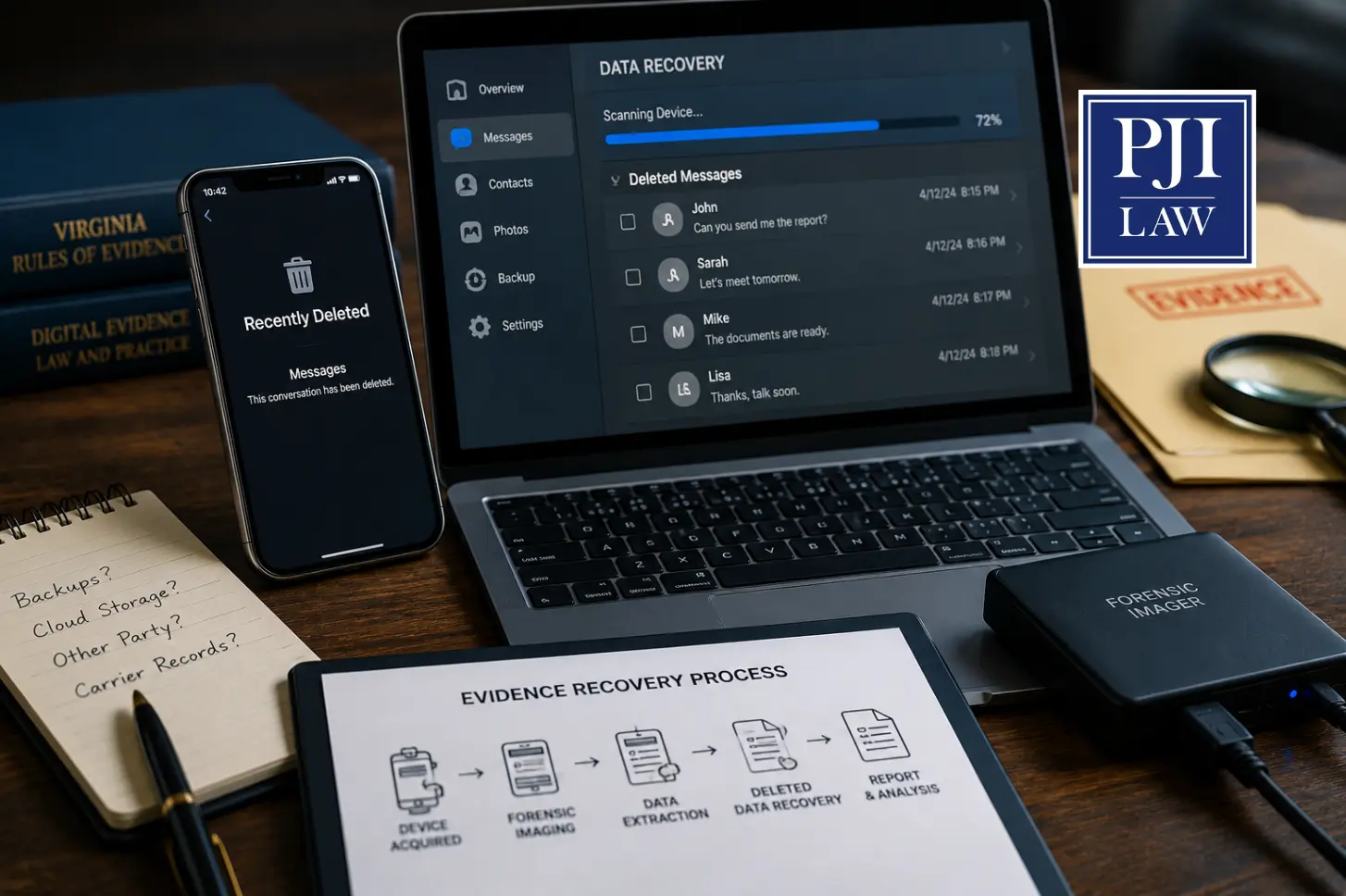
Deleting a conversation feels final. It often isn’t. Whether a deleted message can be recovered depends on how long ago it happened, whether backups exist, whether the device has kept being used since, whether cloud storage caught a copy, and whether the other person in the conversation still has it on their end.
In some cases, forensic tools used by trained professionals can pull deleted messages back from a device or backup, though recovery isn’t something you can count on, and time works against you.
One distinction worth knowing: Phone carriers often keep records showing that a message was sent or received at a certain time, but they typically don’t retain the actual content. If deleted communications could affect your case, talk to a lawyer before you try to recover or alter anything on the device yourself.
How Would the Other Side Even Get Your Messages?
Many people assume their texts and private messages are safe unless they choose to hand them over. That’s not how it usually works. In a civil case, the other side has formal ways to request your electronic communications during discovery, the phase where both sides exchange information before trial.
That typically includes requests for production of documents, which can cover text messages, emails, and social media content stored on your phone, in the cloud, or through the app you used to send them.
If you don’t produce what’s requested and a court believes you should have, that alone can raise more red flags than the messages themselves. In cases where a subpoena is issued to a third party, like a cell carrier or a platform such as Meta or Google, records tied to your account can be turned over even if you deleted the conversation on your end.
Protecting Your Digital Evidence Before It’s Gone
Your biggest mistake won’t be sending the wrong text. It’ll be waiting too long to preserve it. Devices get replaced, accounts get closed, auto-delete settings quietly clear out conversations, and information gets overwritten without anyone deciding to erase it on purpose.
Ask yourself: If your case went to court tomorrow, could you actually produce the original conversation, or just your memory of it? If your dispute looks like it’s headed toward litigation:
- Hold onto your original device
- Save full conversations instead of cropped screenshots
- Keep emails with their attachments intact
- Note dates and times
- Avoid marking up or editing anything
- Back up what you can
One warning worth taking seriously: Once litigation has started, or is reasonably expected, deleting relevant evidence isn’t just risky. It can lead to real legal consequences. Courts don’t look kindly on evidence that should have existed and mysteriously doesn’t.
Do Screenshots Alone Prove Anything?
Not usually. A screenshot shows a conversation, photo, or post, but on its own it doesn’t establish who created it, whether it’s been altered, or whether it reflects the full exchange. That’s why attorneys often go looking for more: the original messages, metadata, device information, backup records, or testimony from someone who was actually part of the conversation.
One screenshot standing alone is a weak foundation. The strongest digital evidence tells the complete story, not just part of it.
This is also why forensic recovery tends to hold up better than a screenshot pulled from someone’s phone. A qualified professional extracting data from a device can document exactly how the information was collected and preserved, creating a clear chain of custody from the original source to the courtroom. A screenshot, by contrast, has no such trail. Anyone could have taken it, edited it, or cropped it before it reached you.
How the Other Side Can Push Back on Your Evidence
Text message evidence gets challenged constantly, and usually along the same lines. The opposing party might argue the messages weren’t actually sent by the person you’re pointing to, that the conversation is incomplete, that a screenshot was altered, that the messages lack context, or that someone else had access to the phone or account at the time.
Ever left your phone sitting on a table at a bar or an open office? That’s all it takes for someone to argue the messages came from someone else entirely. Beating back these challenges usually comes down to corroborating evidence, credible testimony, and records that were preserved the right way from the start.
Can Digital Evidence Actually Win Your Case?
It can carry real weight. Modern lawsuits are full of digital communication, and it often ends up proving the existence of an agreement, pinning down a timeline, showing what someone knew, revealing intent, confirming conversations between the parties, backing up witness testimony, or contradicting a story that’s changed.
In contract disputes, email chains can lay out exactly how a negotiation unfolded and who agreed to what. In real estate disputes, texts between buyers, sellers, or agents can confirm what was disclosed and when. In fraud cases, a scammer’s messages can become some of the strongest proof of intent to deceive. In mechanic’s lien disputes, texts with a contractor can pin down what work was promised, completed, or left undone.
It’s worth noting that criminal cases work under different rules entirely, including Fourth Amendment protections that don’t apply here. Virginia civil courts operate under the Virginia Rules of Evidence, and that’s the standard that governs everything above.
Small Mistakes That Cost People Their Evidence
Digital evidence is persuasive right up until someone mishandles it. Deleting messages after a dispute starts, editing screenshots before sharing them, failing to hold onto the original device, posting about the lawsuit online, ignoring emails tied to the dispute, assuming deleted messages will always come back, and waiting too long to call a Virginia civil litigation attorney are the mistakes that show up again and again.
Acting early keeps evidence in its original form and makes questions about authenticity a lot easier to answer later.

Frequently Asked Questions
Are text messages admissible in civil court in Virginia?
If text messages satisfy Virginia’s evidentiary requirements, including authentication and relevance, they can be admitted during a civil lawsuit.
Can deleted text messages be recovered?
Sometimes, through backups, another participant’s device, or forensic tools, though recovery depends on the circumstances.
Are screenshots enough to admit text messages into evidence?
Not always. Courts may also want the original messages, metadata, witness testimony, or other supporting evidence.
Can emails be used as evidence in court?
Yes, when they’re authenticated and comply with the applicable evidentiary rules.
Can social media posts be used against someone in a lawsuit?
Public posts, photos, comments, videos, and private messages can all become relevant depending on the facts.
What is authentication?
It’s the process of showing that evidence is genuine and is what the person offering it claims it to be.
Should I delete text messages before filing a lawsuit?
Deleting potentially relevant evidence once litigation is anticipated can create serious legal problems of its own.
What if someone claims they didn’t send the messages?
Courts weigh testimony, metadata, device information, and surrounding circumstances to sort out who actually sent what.
Are text messages enough to win a civil case on their own?
Rarely by themselves. Courts typically look at them alongside testimony, documents, and everything else in the case.
When should I contact a Virginia civil litigation attorney?
As soon as you think electronic communications could affect your case. Early guidance can protect evidence before it disappears.
Protect the Digital Evidence That Could Strengthen Your Case
Electronic evidence in civil litigation often carries real weight, but only when it’s preserved, authenticated, and presented the right way under Virginia law. The steps you take now, before anything is deleted, altered, or lost, are what determine whether that evidence holds up later.
At PJI Law, PLC, our team represents individuals and businesses throughout Northern Virginia in a wide range of civil litigation matters. Our Virginia civil litigation attorneys can review your electronic communications, walk through how Virginia law applies to your situation, and build a strategy around the evidence you actually have. Call (703) 865-6100 or contact us online to schedule your complimentary consultation today.
At PJI Law, you’ll receive white-glove service and personal attention from a team that treats you like family.
Copyright © 2026. PJI Law, PLC. All rights reserved.
The information in this blog post (“post”) is provided for general informational purposes only and may not reflect the current law in your jurisdiction. No information in this post should be construed as legal advice from the individual author or the law firm, nor is it intended to be a substitute for legal counsel on any subject matter. No reader of this post should act or refrain from acting based on any information included in or accessible through this post without seeking the appropriate legal or other professional advice on the particular facts and circumstances at issue from a lawyer licensed in the recipient’s state, country, or other appropriate licensing jurisdiction.
PJI Law, PLC
3900 Jermantown Road, 2nd Floor
Fairfax, VA 22030
(703) 865-6100
https://www.pjilaw.com
