


If you’ve created a trust as part of your estate plan, you may have already transferred your home, bank accounts, or other property into it. But what about the vehicle sitting in your driveway? Can you put a car in a trust, and does doing so make sense in Virginia?
Yes. Virginia allows a vehicle to be held in a trust, but placing it there requires more than simply listing the car in your estate planning documents. You must transfer the vehicle’s title through the Virginia Department of Motor Vehicles (DMV) so the title reflects the trust arrangement. Depending on the circumstances, you may also need to address an existing lien, insurance coverage, and potential tax implications.
Putting a vehicle in a revocable living trust can help keep it out of the probate process and allow the trustee to manage or transfer it according to the trust’s terms. At PJI Law, PLC, our Richmond estate planning attorneys help clients determine how different assets and property fit into their overall estate plans.
Before retitling your car, it helps to know what the process involves, the potential advantages and disadvantages, and whether placing the vehicle in your trust is appropriate for your circumstances.

At a Glance
- Virginia permits vehicles to be held in trusts.
- Putting a car in a trust requires retitling the vehicle through the DMV.
- A revocable living trust can allow a vehicle to pass outside the probate process.
- Certain transfers involving revocable trusts may qualify for an exemption from motor vehicle sales and use tax.
- Liens, lender requirements, and auto insurance should be reviewed before retitling a vehicle.

Why Would You Put a Car in a Trust?
A revocable living trust can hold and manage property and other assets during the grantor’s lifetime and provide instructions for their management and distribution after death.
Whether your vehicle belongs in the trust depends on your estate planning goals, but there are several potential reasons to consider transferring it.
Keeping the Vehicle Out of Probate
A primary reason for putting a car in a living trust is probate avoidance. If you want to avoid probate in Virginia for a particular asset, that property must be titled or otherwise structured so it can pass outside the probate estate.
A vehicle properly transferred to a revocable living trust during your lifetime can be administered under the trust rather than becoming part of your probate estate solely because of your death.
Providing for Management During Incapacity
A revocable living trust can also address what happens if you become unable to manage your property or make financial decisions during your life. If the vehicle is owned through the trust, a successor trustee may be able to manage it when the requirements in the trust document for successor management are satisfied. This can be useful when the trustee needs to sell or otherwise handle trust property during the grantor’s incapacity.
Coordinating the Vehicle With Your Estate Plan
A trust can provide more detailed instructions than simply naming the person who should receive a vehicle. For example, trust terms can address property intended for younger beneficiaries or coordinate the vehicle with other trust assets. A direct beneficiary designation may be sufficient when you simply want one individual to receive the car after your death.
This is why transferring property to a trust should be considered asset by asset rather than assuming every piece of property belongs in the trust. An estate planning attorney can also review how the ownership of real property, financial accounts, vehicles, and other assets coordinates with your trust and beneficiary designations.
How Do You Put a Car in a Trust in Virginia?

Putting a car in a trust requires retitling the vehicle through the DMV. The Virginia DMV provides specific procedures for titling vehicles in living trusts.
To transfer your vehicle to a trust, the process typically includes these steps:
- Complete the assignment on your current title. Fill out the applicable transfer information on your current Certificate of Title to transfer the vehicle to the trust.
- Apply for a new title in the trust’s name. Submit a Virginia DMV Application for Certificate of Title and Registration (Form VSA 17A) using the trust ownership information required by the DMV.
- Provide your trust documents. Submit the trust documentation required by the DMV showing the trustee’s name.
- Address any existing lien. If the vehicle has a lien, additional documentation is required. The DMV requires a Transfer of Certificate of Title with Lien (Form SUT 4) when transferring a title with an existing lien.
- Claim a tax exemption if applicable. Certain transfers to qualifying revocable living trusts may be exempt from Virginia’s motor vehicle sales and use tax. If applicable, a Purchaser’s Statement of Tax Exemption (Form SUT 3) may be used to document the exemption.
- Pay the applicable DMV fees. Title, license plate, and other fees may apply depending on the transaction.
- Update your auto insurance. Contact your insurance carrier so the policy accurately reflects the vehicle’s new ownership arrangement.
Once the transfer is complete, keep the updated title information with your estate planning records and review it whenever you replace the vehicle or make significant changes to your trust or estate plan.

Do You Pay Tax When Transferring a Car to a Trust in Virginia?
State law imposes a motor vehicle sales and use tax on many vehicle transactions, but certain transfers involving revocable trusts may qualify for an exemption. Under Virginia Code § 58.1-2403, certain vehicle transfers to trustees of a revocable inter vivos trust, also known as a revocable living trust, may qualify for an exemption from Virginia’s motor vehicle sales and use tax when the statutory requirements are met.
The exemption doesn’t mean that transferring any vehicle to any trust is automatically tax-free. The type of trust, identity of the parties, value and ownership of the vehicle, and nature of the transaction can affect whether the exemption applies.
DMV guidance also requires the trust documents to establish that the trust is revocable for a qualifying transfer to receive the applicable sales and use tax exemption. An estate planning attorney can review the trust, vehicle title, and financing before the transfer to help determine whether the transaction meets the applicable requirements.
Can You Put a Financed Car in a Trust?
Having a loan on your vehicle doesn’t necessarily prevent a trust transfer, but it adds another party to the process because the lender has a financial interest in the vehicle. An existing lien doesn’t disappear when the car is transferred into a trust. Before retitling the vehicle, review the loan agreement and contact the lender to determine whether approval or additional documentation is required.
DMV guidance also distinguishes between a vehicle transferred with an existing lien and a transaction involving a new lien contract when determining whether the trust transfer qualifies for the sales and use tax exemption.
If your vehicle is financed, addressing the lender’s requirements before submitting the title transfer can help prevent problems with the process.
Does Putting a Car in a Trust Affect Auto Insurance?
Transferring a vehicle to a trust changes its titled ownership, so review your auto insurance before completing the transfer. Contact your insurance carrier and explain the proposed trust ownership. Ask how the trust, trustee, and drivers should be identified on the policy and whether any changes to your coverage are required. If you have an umbrella policy, review that coverage as well.
Putting a vehicle in a trust doesn’t eliminate liability associated with owning or operating it. Because changing the titled owner may affect the insurance requirements for the vehicle, the title and insurance policy should accurately reflect the ownership arrangement.
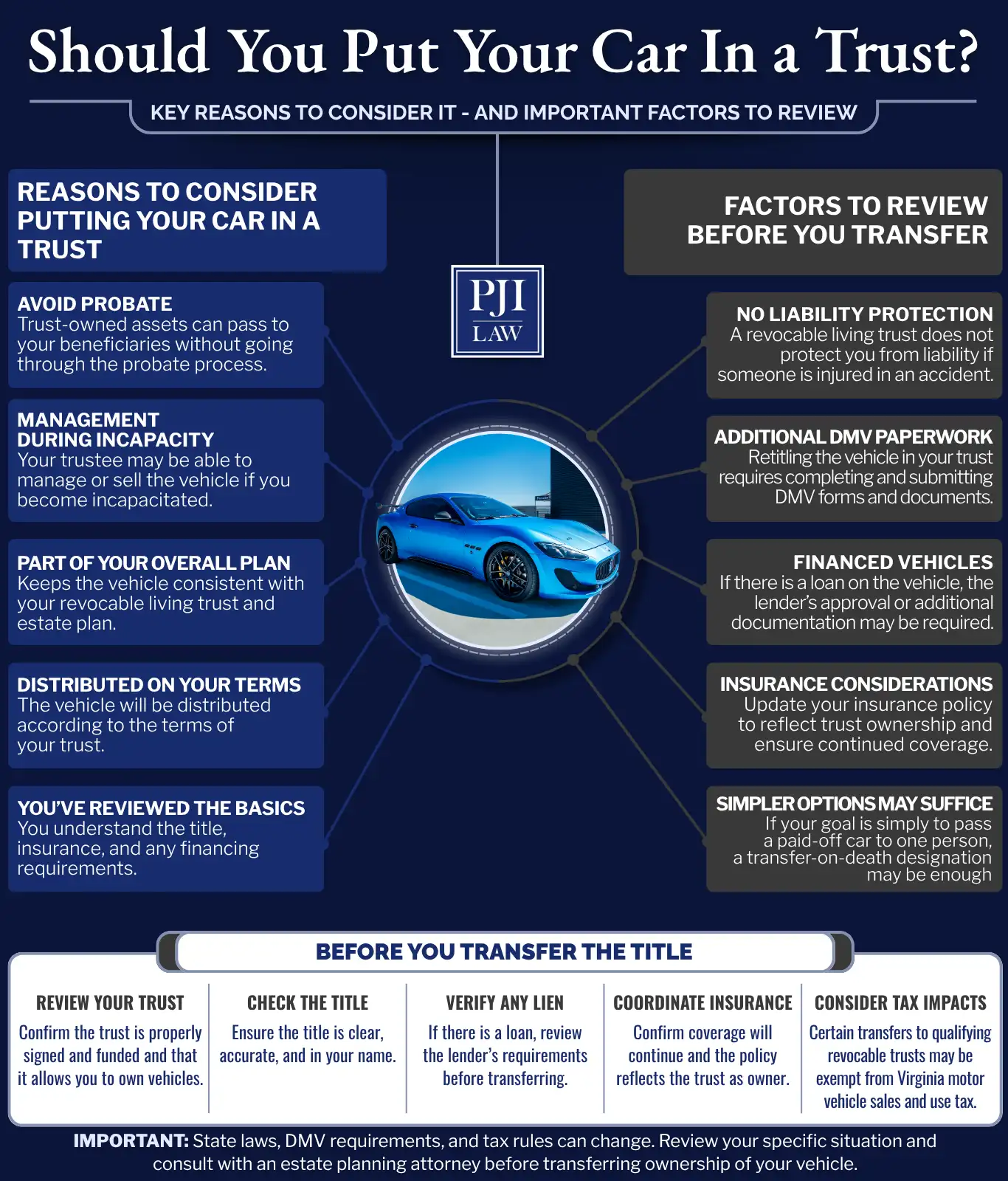
What Are the Downsides of Putting a Car in a Trust?
Putting a car in a revocable living trust can help keep the vehicle out of probate and allow the trustee to manage it during incapacity, but there are tradeoffs to consider.
One is that a revocable living trust doesn’t provide asset protection simply because the car is titled in the trust. Under Virginia Code § 64.2-747, property in a revocable trust remains subject to creditor claims against the person who created the trust during that person’s lifetime. Because owning or operating a vehicle can give rise to liability claims, adequate insurance remains particularly important.
Other potential downsides include:
- Additional administration: Transferring the car requires retitling it through the DMV and coordinating the ownership change with your insurer and any lender.
- More work when you change vehicles: If you sell or trade the car, you’ll need to address the trust ownership as part of the transaction. People who replace vehicles frequently may find this added administration inconvenient.
- The trust may be more than you need: If your only goal is to keep a paid-off vehicle out of probate and transfer it directly to one person after your death, Virginia’s Transfer on Death beneficiary designation may provide a simpler alternative, although it has its own requirements and limitations.
Whether these drawbacks outweigh the benefits depends on the vehicle, your insurance and financing, and what you want the trust to accomplish as part of your estate plan.
Is a Transfer on Death Title an Alternative to Putting a Car in a Trust?
If your primary goal is keeping a vehicle out of probate, Virginia provides another option. Under Virginia Code § 46.2-633.2, an eligible vehicle owner can designate one individual to receive the vehicle after the owner’s death.
A Transfer on Death (TOD) designation doesn’t give the beneficiary an ownership interest during your lifetime. However, it has limitations. According to the Virginia DMV, a vehicle with a lien isn’t eligible, and the beneficiary generally must apply for a new title within 120 days after the owner’s death.
A TOD title may be worth considering when your primary goal is transferring a paid-off vehicle directly to one person. A revocable living trust may provide greater flexibility when the vehicle is part of broader planning for incapacity, multiple assets, or more detailed beneficiary instructions.
Should You Put Your Car in Your Trust?
Whether your car belongs in your trust depends on the vehicle, its value, and what you want your estate plan to accomplish.
Before deciding, consider:
- Is the vehicle owned outright or financed?
- Who should receive the vehicle after your death?
- Would someone need authority to manage or sell the property if you become incapacitated?
- Does your trust contain instructions relevant to the vehicle or its beneficiaries?
- Would a TOD designation accomplish your goal more simply?
- What does your insurance carrier require for a trust-owned vehicle?
- Does the proposed transfer qualify for the sales and use tax exemption?
- How does the vehicle fit with your other property and beneficiary designations?
A person with a paid-off vehicle and one intended beneficiary may reach a different decision than a grantor whose revocable trust contains provisions for multiple beneficiaries or continuing management of assets.
An estate planning attorney can review the vehicle alongside your other property, financial accounts, and estate documents to determine which ownership method fits your broader plan.

Frequently Asked Questions
Can you put a car in a trust in Virginia?
Yes. State law recognizes vehicles held in trusts, and the DMV provides procedures for titling vehicles in living trusts. You must complete the appropriate title transfer and provide the required documentation.
Should I put my car in my living trust?
It depends on your estate plan. Trust ownership may be useful for probate avoidance, incapacity planning, or coordinating the car with other trust property and assets. A TOD designation may be simpler when you only want one individual to receive the vehicle after your death.
Does putting a car in a trust avoid probate in Virginia?
A vehicle properly transferred to a revocable living trust during your lifetime can generally be administered under the trust rather than becoming part of your probate estate solely because of your death.
How do I transfer my Virginia car title to a trust?
You must retitle the vehicle through the DMV and provide the required title, application form, and trust documentation. Additional requirements may apply when a lender has an interest in the vehicle.
Can I put a financed car in a trust?
Possibly. An existing lien doesn’t automatically disappear or necessarily prevent a trust transfer. Review your loan agreement and contact the financial institution or other lender before attempting to change the vehicle’s title.
Will putting my car in a trust affect my insurance?
It may affect how ownership should be reflected on the policy. Contact your insurance carrier before transferring the title to determine how the trust arrangement should be documented and whether coverage changes are necessary to protect the vehicle and other property.
Do I have to pay taxes when transferring my car to my trust in Virginia?
Certain transfers involving qualifying revocable trusts may be exempt from motor vehicle sales and use tax when the statutory requirements are satisfied. Not every inter vivos transfer of a vehicle to a trust automatically qualifies for the exemption.
Can I name a beneficiary on my car title in Virginia?
Yes. State law allows eligible vehicle owners to designate one individual as a Transfer on Death beneficiary. The designated beneficiary doesn’t receive an ownership interest during your life, and a vehicle with a lien isn’t eligible for a TOD designation.
What happens to my car if I die without putting it in a trust?
If another ownership or beneficiary arrangement doesn’t control the transfer, a vehicle titled solely in your name may become part of your probate estate. The personal representative may then need to address the property with other estate assets through the probate process.
Can a trustee sell a car owned by a trust?
Yes. Virginia law gives trustees authority to sell trust property, subject to the terms of the trust and the trustee’s fiduciary duties. When selling a vehicle owned by the trust, the trustee must also address the vehicle’s title and any existing lien as part of the transaction.
Decide Whether Your Car Belongs in Your Trust
If you’re considering putting a car in a revocable living trust, the decision involves more than avoiding probate. How the vehicle is titled can affect insurance, financing, liability, taxes, and how the car is managed if you become incapacitated or after your death. Reviewing the vehicle as part of your broader estate plan can help you determine whether transferring it to your trust is appropriate for your circumstances.
At PJI Law, PLC, our Richmond, Virginia, estate planning attorneys help clients create and maintain estate plans tailored to their property, family, and long-term goals. An attorney can review how your vehicles and other assets are titled, explain the available options under Virginia law, and help you coordinate those choices with the rest of your estate plan.
Call (804) 653-3450 to schedule your complimentary consultation. You can also complete our confidential online form if that’s more convenient.
At PJI Law, you’ll receive white-glove service and personal attention from a team that treats you like family.
Copyright © 2026. PJI Law, PLC. All rights reserved.
The information in this blog post (“post”) is provided for general informational purposes only and may not reflect the current law in your jurisdiction. No information in this post should be construed as legal advice from the individual author or the law firm, nor is it intended to be a substitute for legal counsel on any subject matter. No reader of this post should act or refrain from acting based on any information included in or accessible through this post without seeking the appropriate legal or other professional advice on the particular facts and circumstances at issue from a lawyer licensed in the recipient’s state, country, or other appropriate licensing jurisdiction.
PJI Law, PLC
4108 E Parham Road
Richmond, VA 23228
(804) 653-3450
https://www.pjilaw.com/
